Start with your reel.
A few familiar shapes are all you need to begin. Match a reel, learn three parts, then see what happens when you turn the handle.
Which reel looks like yours?
Compare the visible shapes. Choose the spinning reel for this lesson, or open the guide for your reel.
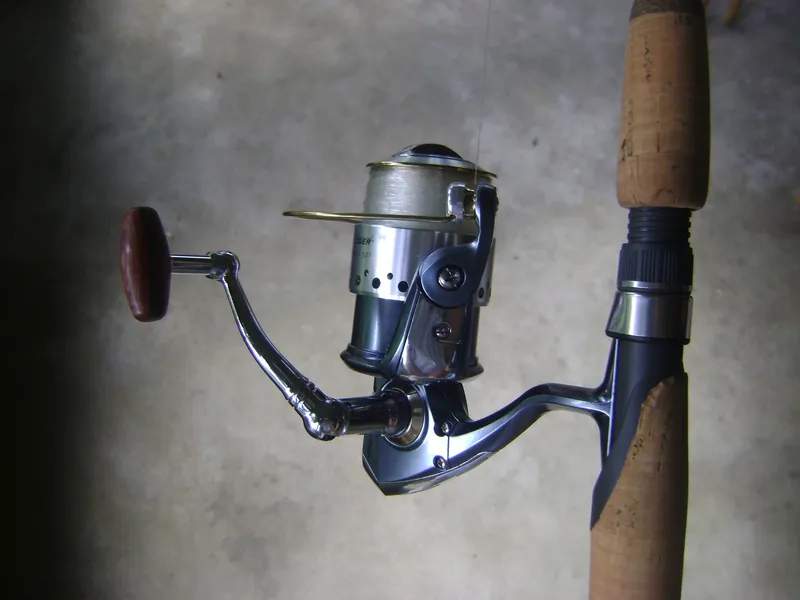
Spinning reel

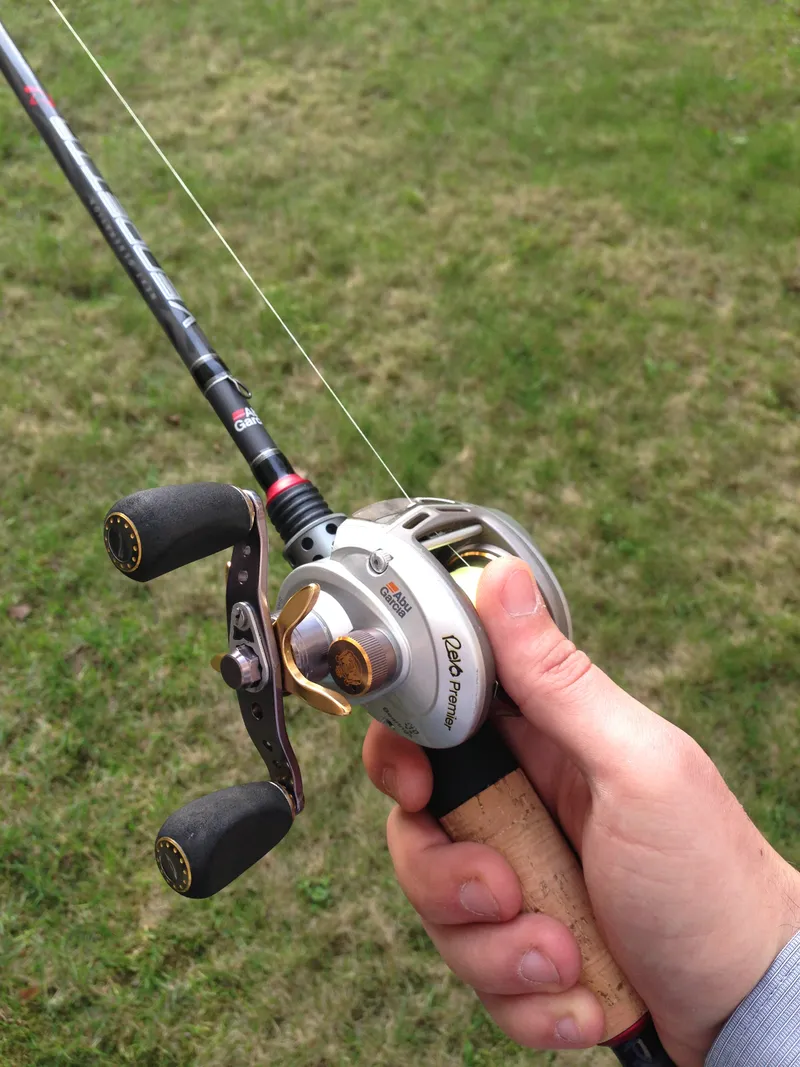
Baitcaster
The spool sits between the sides of the reel. Here it is partly covered by the thumb.3
Low-profile example

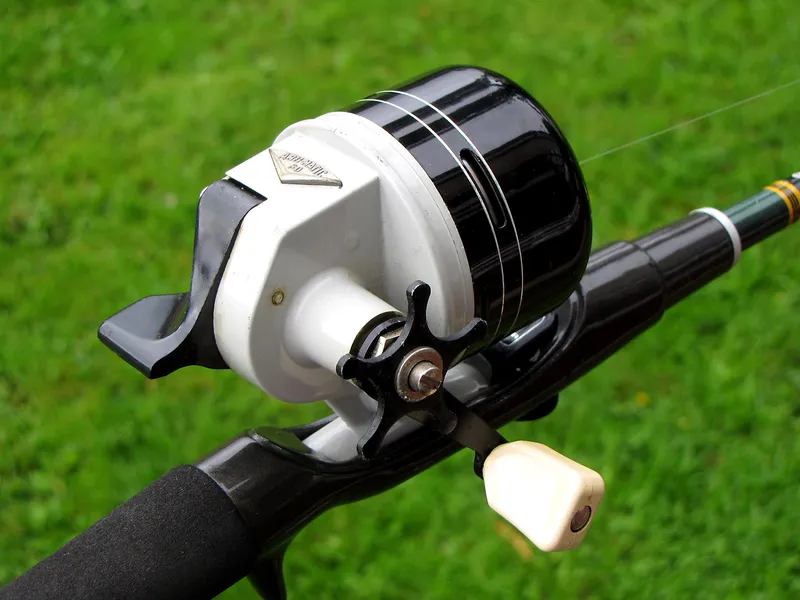
Spincast reel
A cover encloses the spool. Line leaves through an opening in the front.4
Vintage example; controls vary
Photo: Petey21CC0 1.0Image details

I'm not sure
Look for the curved wire beside the exposed spool. If you can see it, compare your reel with the spinning example. A covered spool looks more like the spincast example above.
You can learn with the spinning example even if you do not have a reel with you.
Start with the spinning reel exampleMine looks different
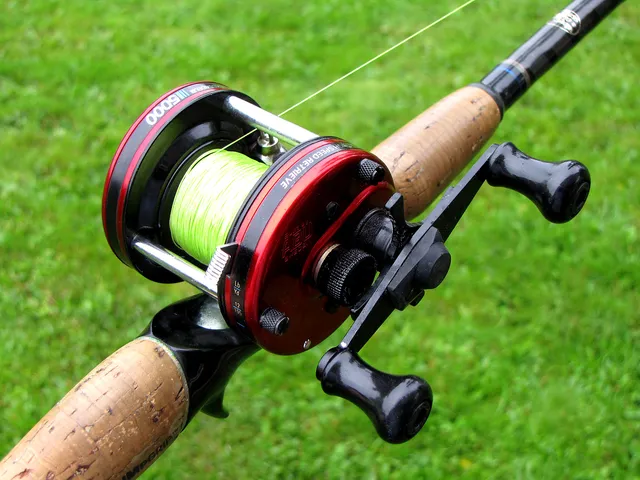
Photo: Petey21CC0 1.0Image details

A round baitcaster is still a baitcaster.
This example has a round body instead of the low profile shown above. The spool still turns to let line out and wind it back in.3567
Use the visible parts to compare. Body shapes, handle sides and individual controls can vary.
Compare the reel familiesFind three useful parts
Choose a part, then switch views to find it on the drawing.
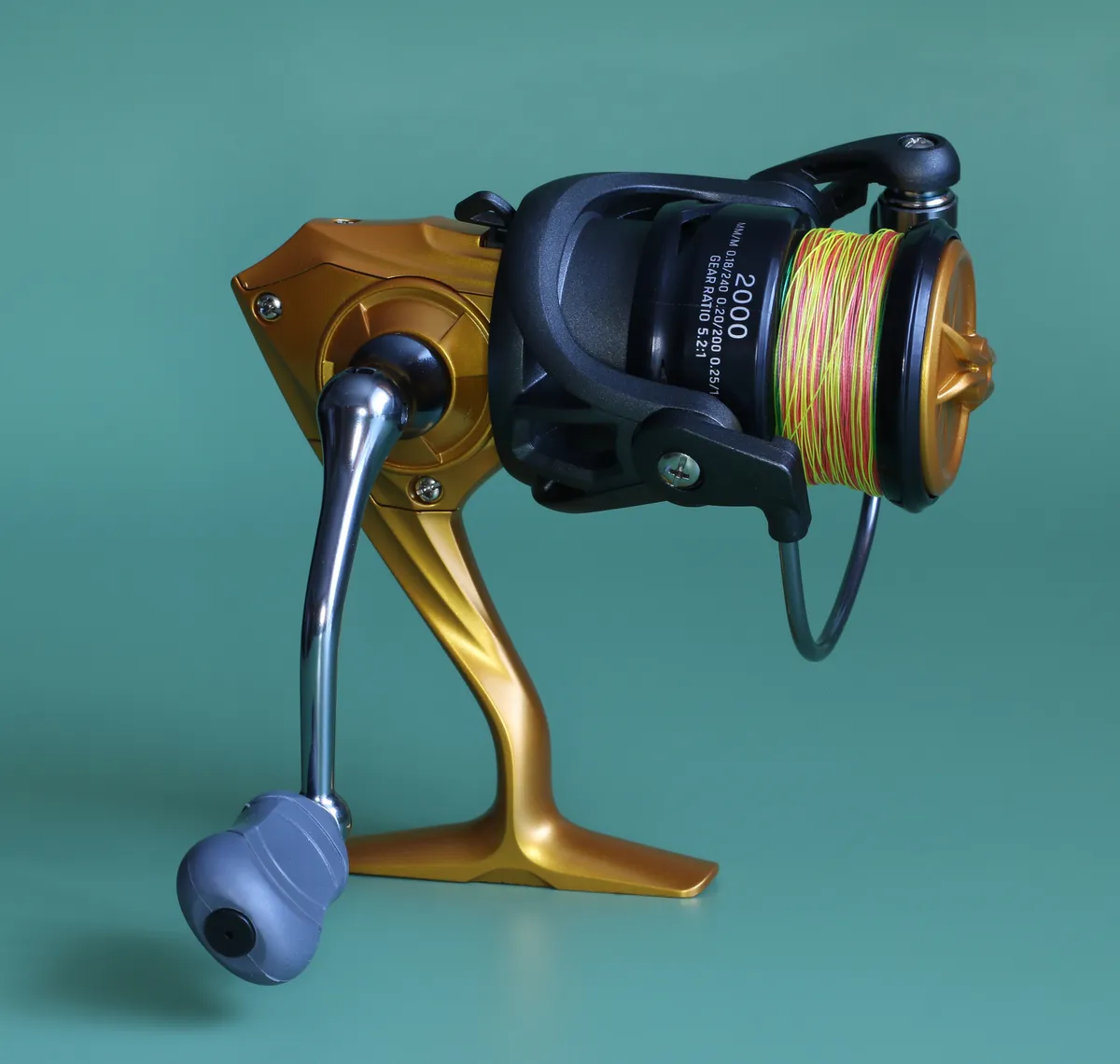
Handle
You turn the handle to wind the line back in.1289
Follow the metal arm to the grip at the lower left of this photo.
Winding the line back in is called retrieving. The handle drives the reel through its gears.1289
Photo: George ChernilevskyCC BY 4.0 · Labels addedImage details

Find the spool and rotor below. Predict which one turns, then press Play motion.
Watch the line wind back in
Trace the line before anything moves.
What turns to wind line back in?
2 of 2
Still frame. Play a short demonstration.
Try a prediction
Spinning reel
Simplified mechanism examples. Arrows show the direction of motion; sizes and timing are illustrative.
Try a different reel
Same three parts. A different model and camera angle. Find each one in the photograph.
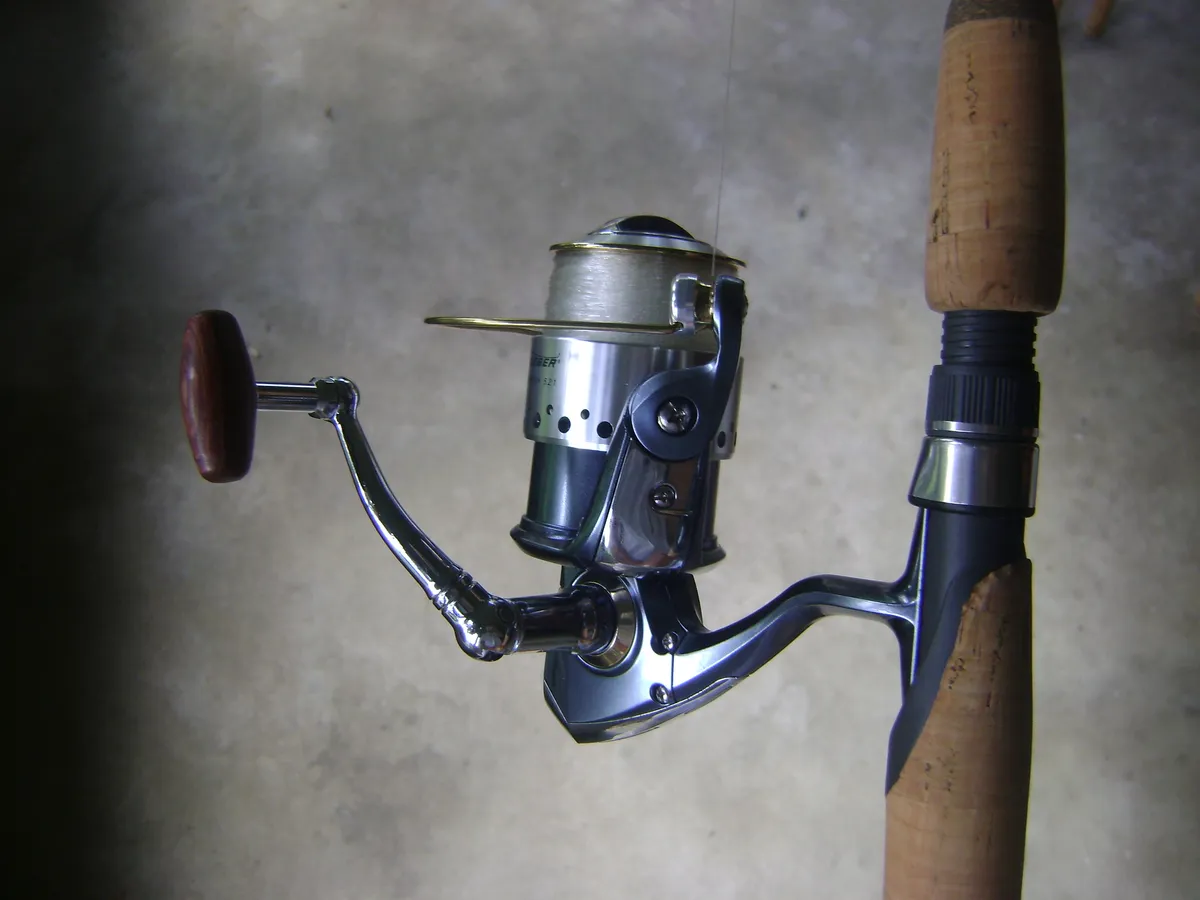
Photo: Jonathan Ewen & Stephen EwenCC BY 3.0 · Labels addedImage details
Grip on the left, at the end of a bent metal arm.
Drum wrapped in pale fishing line near the top of the reel.
Thin curved wire crossing in front of the spool.
Round complete
Handle · A. The handle is the crank you turn. Here its grip is at the left, away from the spool.
Spool · B. The spool is the drum holding the pale line. The curved wire in front is the bail.
Bail · C. The bail is the thin curved wire in front of the spool. Its shape looks flatter from this angle.
Find the bail, spool and handle using the three letter markers. Open the answers when you are ready.
Check the photo answers
Next: follow the line out
You have found the parts and seen a retrieve. Next, see what changes when the bail opens for a cast.
Sources
First cited on this page- Take Me Fishing (RBFF): Fishing reel partsBack to explanation
- Okuma Fishing USA: Tune-Up Tuesday: Anatomy of a Spinning ReelBack to explanation
- Lew's: Speed Spool LSG1HAMG / LSG1SHAMG manualBack to explanation
All references 13 in total
- Zebco: Spincast reel instructionsBack to explanation
- Lew's: Denny Brauer: how to avoid backlashBack to explanation
- Minnesota Department of Natural Resources (MinnAqua): MinnAqua Leader's Guide, Lesson 5:1 Freshwater Rods and ReelsBack to explanation
- Take Me Fishing (RBFF): Tips on How to Cast with Different ReelsBack to explanation
- Take Me Fishing (RBFF): How to Switch Reels Right to Left-HandedBack to explanation
- Daiwa: How to choose the right spinning reelBack to explanation
- Shimano North America: Shimano FAQ: rod power and action, series ratingsBack to explanation
- Vermont Fish & Wildlife Department: Casting Rods and ReelsBack to explanation
- Sport Fishing magazine (Sam Hudson): High-Speed Saltwater Fishing ReelsBack to explanation
- Wikipedia: Fishing reel (revision 1370480365, 21 Aug 2026)Back to explanation